Writing
Mrs Knight
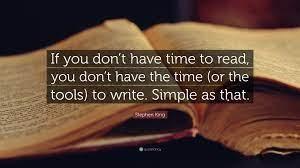
The above quote underpins our belief that GREAT READERS make GREAT WRITERS, and based on this philosophy, we have adopted the Reader in to Writer model (R2W). This approach sees writing inspired by reading high-quality literature. These carefully selected texts are used to absorb children in rich and varied vocabulary; give them a clear understanding of authorial flow and crafted authorial technique; see grammar, spelling and punctuation contextualised in written form and expose children to structures that act as scaffolds for their own writing.
We have designed our wider curriculum so that it provides motivation to write with purpose. Our curriculum themes provide content, and a reason to write, when communicating to a wider audience.
We use first-hand experiences to inspire awe and wonder and create learning opportunities, around writing, that are three-dimensional; expecting pupils to be active participants not just passive observers when gathering ideas, viewpoints and vocabulary. We recognise the importance of oracy as a first step in preparing for written composition, making oral rehearsal a key skill of drafting.
This creative approach extends to the use of Pie Corbett’s Talk 4 Writing, which is utilised in EYFS and KS1. We recognise that younger children benefit from oral repetition, enabling them to imitate the language they need for a particular topic or narrative before writing their own version. We use innovation (imitating the narrative structure whilst changing key elements to make it their own) and invention (writing a parody of the narrative using the skills they have learnt) as a next step of development.
When moving through the writing sequence, we use slow writing approaches that enable children to engage and immerse with the ‘reading’ model; focusing on skills lessons that teach technical and grammatical accuracy in writing (SPaG). These short burst writing opportunities give children the skills and confidence they need to move towards more sustained written compositions.
One of the core offers of our writing provision is to have adults model-write in front of children every day, articulating and demonstrating authorial flow, technique and structure. We recognise that children are hardwired to mimic the actions of adults and so we encourage staff to become ‘role model’ writers. As children are encouraged to be active participants of this process, they are expected to share their ideas, vocabulary and contributions so that they are part of the whole class joint composition. The WAGOLL (what a good one looks like) acts as a prompt for independent writing. This approach holds particular value for reluctant or struggling writers as they benefit from having a visual structure to hang their ideas off.
Approach to planning the Writing Journey
|
Deconstruct It! – use of WAGOLLS to establish text and language features. These can form Steps to Success (StS) Collect It! – explore and collect rich and varied language from reading to use in own writing Plan It! – after full immersion in language, knowledge of topic and structures of text type, plan what they want to write (this can be done as a whole class/group joint composition or a story/fact map) Rehearse It! (optional) – giving children experience of short burst writing opportunities that feed directly in to the text type. This can be practising and crafting a newly taught skill – effect and compositional and/or grammar and punctuation. Construct and Write it! – readiness to write final piece. This should offer opportunity to write for extended and sustained lengths. It can be chunked across several days but end up as a final and complete composition. This will include precision teaching (inc. spelling / grammar and punctuation), modelling and crafting and relating back to purpose and function of text. Edit it! – encourage children to take ownership of their own writing. Editing should first be taught and then children can self-edit or peer edit. Reference must be paid to the success criteria collected at the Deconstruct stage. Celebrate It! (optional)– choose key pieces that should be written up to published standard. This allows you to create a relevant print rich environment where children’s work is displayed. It also gives opportunity for children to practise their handwriting with an emphasis on audience and purpose.
We have also streamlined the types of writing we cover and have built our writing curriculum around the 4 main purposes of writing (based on Michael Tidd’s Principles) – Writing to Entertain, Writing to Inform, Writing to Persuade and Writing to Discuss. This allows us to build writing up in longer blocks focusing on quality not quantity.
|

|
English Blueprint | [pdf 400KB] |

|
|
|
3Is Intent Statement for English | [pdf 1014KB] |
|
|
|
Barnwood CofE Oracy Progression Map | [pdf 502KB] |
|
|
|
Barnwood C of E Primary Writing Curriculum Plan Year R | [pdf 772KB] |
|
|
|
Barnwood C of E Primary Writing Curriculum Plan Year 1 | [pdf 828KB] |
|
|
|
Barnwood C of E Primary Writing Curriculum Plan Year 2 | [pdf 846KB] |
|
|
|
Barnwood C of E Primary Writing Curriculum Plan Year 3 | [pdf 829KB] |
|
|
|
Barnwood C of E Primary Writing Curriculum Plan Year 4 | [pdf 845KB] |
|
|
|
Barnwood C of E Primary Writing Curriculum Plan Year 5 | [pdf 851KB] |
|
|
|
Barnwood C of E Primary Writing Curriculum Plan Year 6 | [pdf 854KB] |
|
LANGUAGE AND VOCABULARY
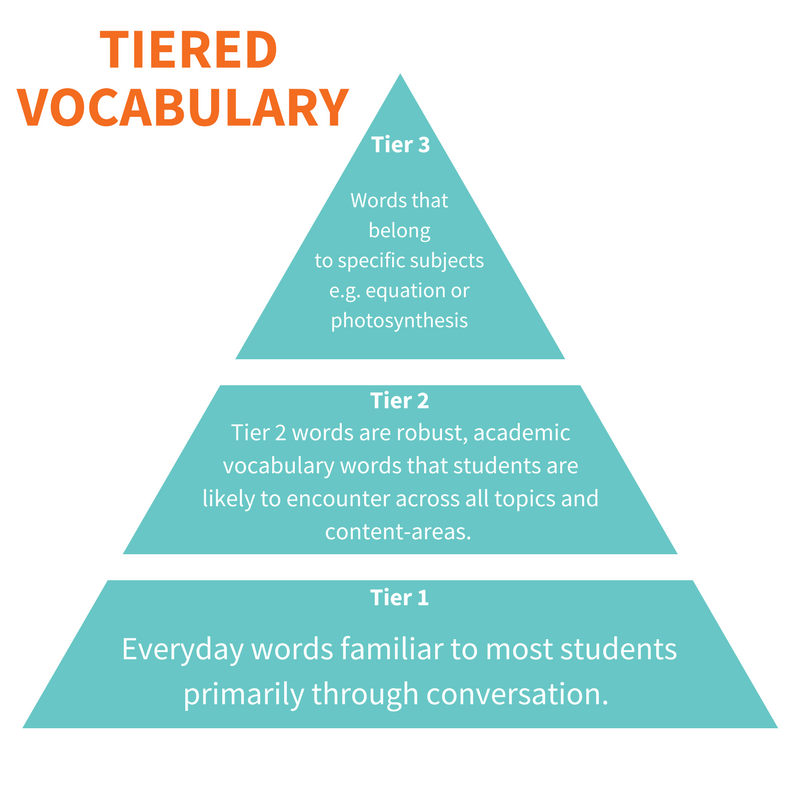
Vocabulary is a strong indicator of reading success (National Literacy Trust, 2017). We know from research that the size of a child’s vocabulary is the best predictor of good educational outcomes. Children with a poor vocabulary, at five, are four times more likely to struggle with reading in adulthood (Why Closing the Word Gap Matters: Oxford Language Report, 2018). At Barnwood, we know how important it is for children to have access to an extensive and rich vocabulary, to be successful as a speaker, reader and writer. The meaning of words and new vocabulary is taught, developed and practised through all aspects of our English curriculum; reading (VIPERS), writing (Tiers of Vocabulary) and oracy (speaking and listening). Vocabulary activities are also built into all other subjects across the curriculum and key Tier 3 Vocabulary appears as a feature of planning for every foundation subject within the curriculum.
At Barnwood, we also understand the importance of early language acquisition so with this in mind, screen all children in EYFS using a tablet-based language assessment tool (LanguageScreen). This helps us to identify any children who would benefit from the NELI Programme (Nuffield Early Language Intervention). This is delivered weekly, for 20 weeks, by two fully trained practitioners.
SPELLINGS
Spelling is linked to our Read, Write Inc. Phonics approach and as part of the lesson design, we have embedded opportunities for children to apply their phonics knowledge to writing. There is weekly practise of spellings linked to high frequency words and the spelling lists found in the National Curriculum.
We also use Spelling Shed to make the spelling of teaching more engaging and visual. Children have access to the app 'Spelling Shed' in school and at home, where they can practise their weekly spellings as part of their homework.