Mathematics
Mrs Bennett
Barnwood C of E Primary School - Mathematics Statement of Intent
At Barnwood C of E Primary School, we believe that a quality Mathematics curriculum should ensure that ability within Mathematics is not fixed and foster positive ‘can do’ attitudes, believing all children can achieve in mathematics encouraging children to develop a ‘growth mind-set’.
We will provide a Mathematical curriculum, from EYFS through to Year 6, which follows a clear pathway of progression. and promotes a positive attitude to lifelong learning which is driven by our core vision of ‘loving our neighbour and working together to be the best we can be, for the good of all’.
Children will gain a deep understanding of key mathematical concepts whilst fully embracing learning from mistakes and misconceptions, exploring and acquiring a broadening bank of appropriate and challenging Mathematical vocabulary whilst gaining a hands on experience to learning. Pupils will gain the opportunity to develop culturally, emotionally, intellectually, socially and spiritually when becoming fluent mathematicians who are able to reason and solve a variety of problems by applying what they have learned in a range of contexts fluently that can be applied within real life contexts. Maths is the foundation for understanding the world and we want our children to know the purpose behind their learning and to apply their knowledge to their everyday lives, within our local community and on a global scale.

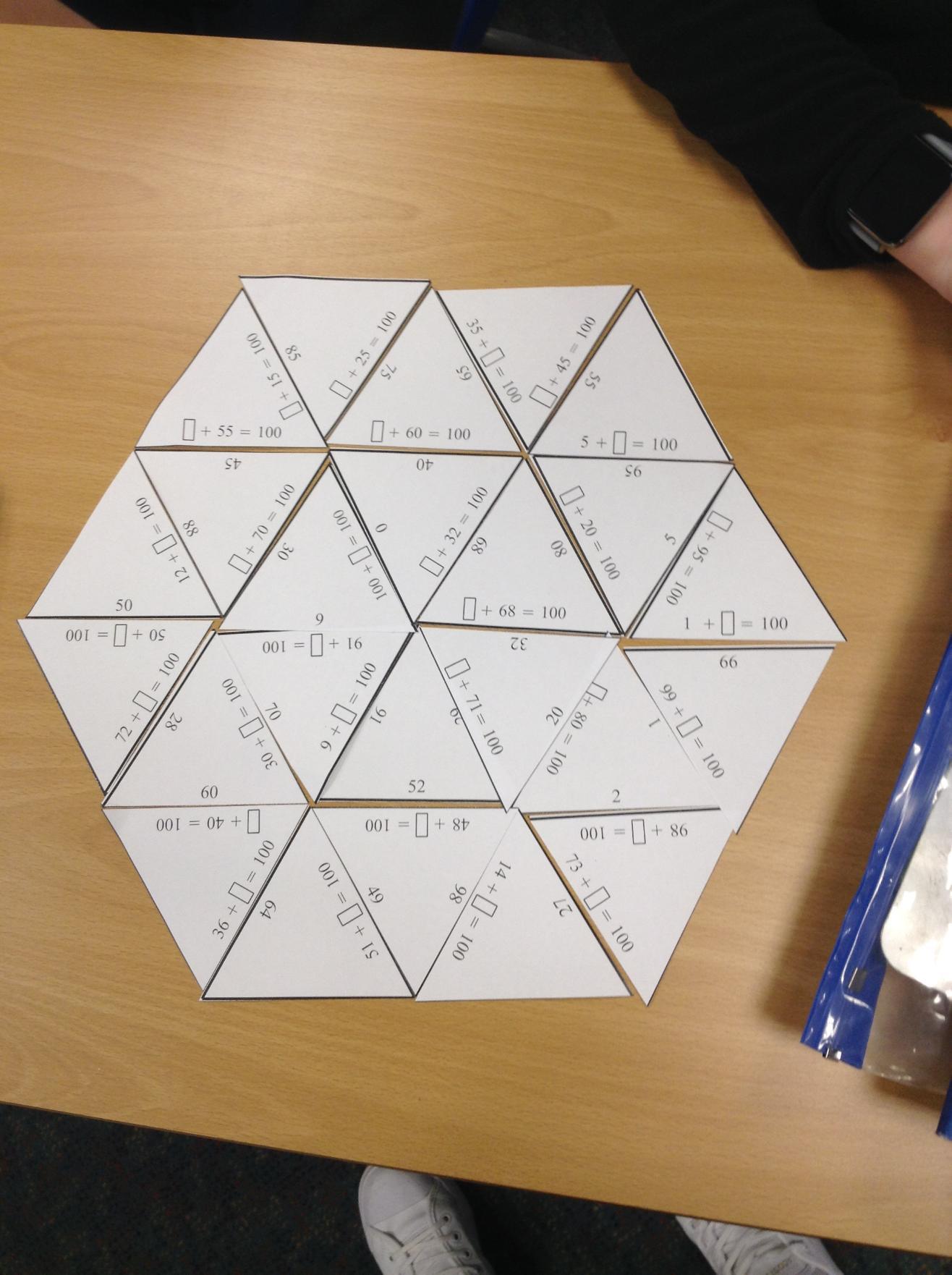
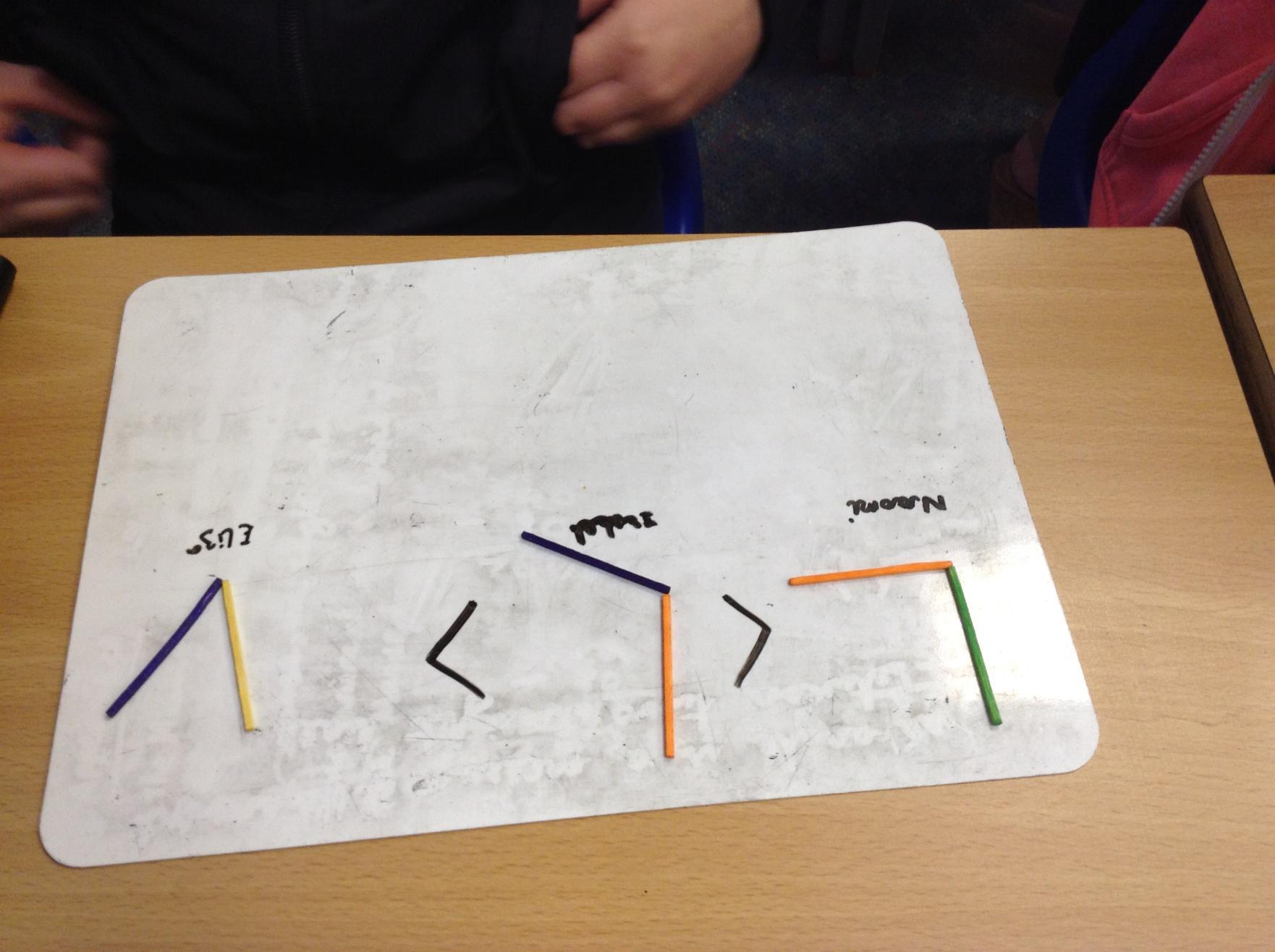


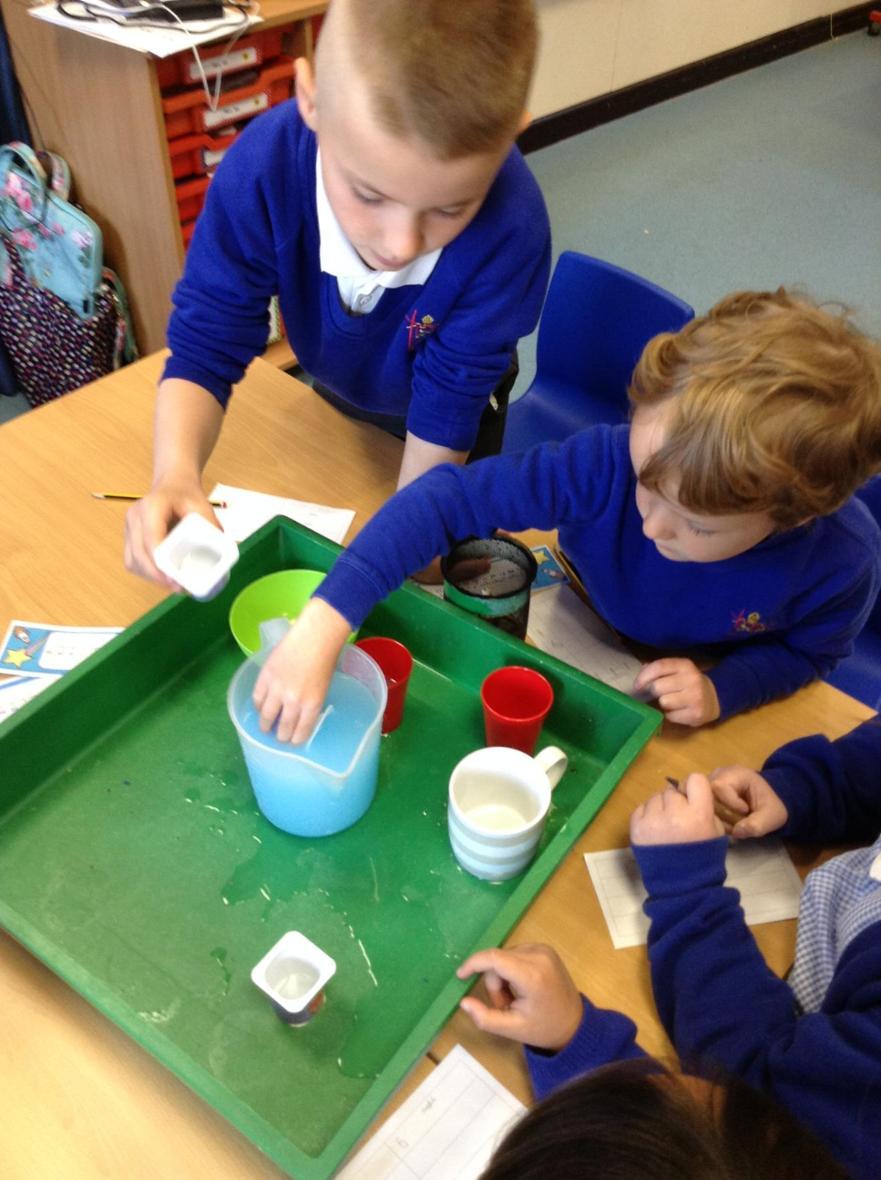
Maths at Barnwood largely takes shape in the form of 'White Rose Maths', however other high quality resources such as NRICH, 'I See Maths' and mastery resources from NCETM are used to deepen pupils' mathematical understanding and promote rich discussion.
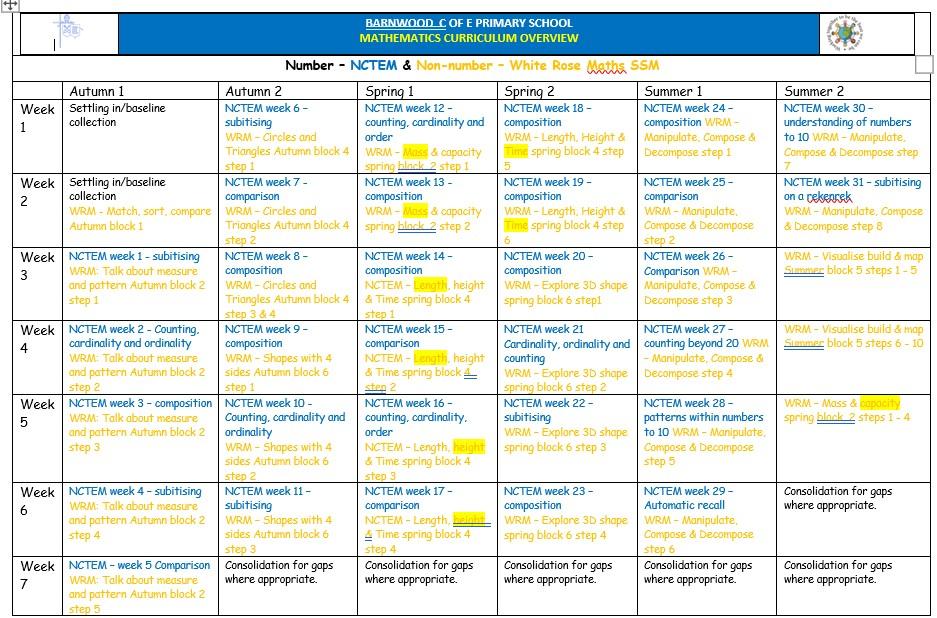
EYFS Mathematics Overview
To view a larger version of this please click on the picture on the left. The whole school document can be viewed by selecting the Barnwood Maths School Overview PDF below.

|
Barnwood EYFS Maths Overview | [docx 81KB] |

|

Year 1 Mathematics Overview
To view a larger version of this please click on the picture on the left. The whole school document can be viewed by selecting the Barnwood Maths School Overview PDF below.
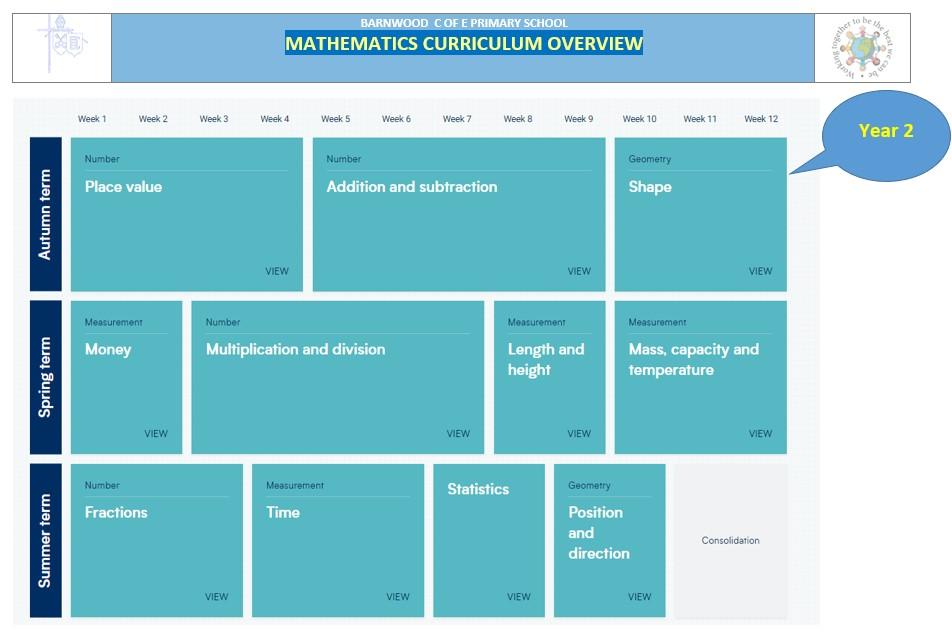
Year 2 Mathematics Overview
To view a larger version of this please click on the picture on the left. The whole school document can be viewed by selecting the Barnwood Maths School Overview PDF below.

Year 3 Mathematics Overview
To view a larger version of this please click on the picture on the left. The whole school document can be viewed by selecting the Barnwood Maths School Overview PDF below.

Year 4 Mathematics Overview
To view a larger version of this please click on the picture on the left. The whole school document can be viewed by selecting the Barnwood Maths School Overview PDF below.
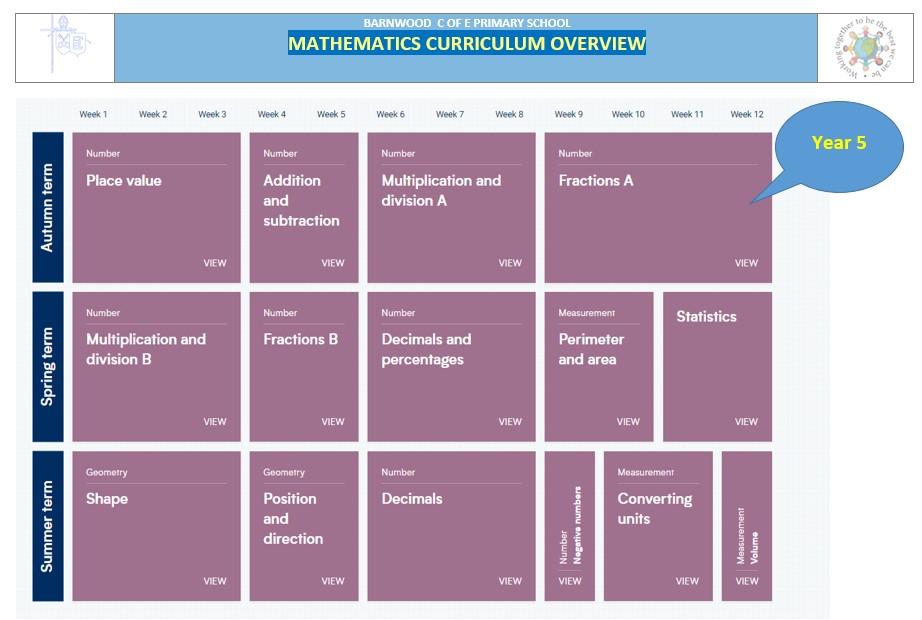
Year 5 Mathematics Overview
To view a larger version of this please click on the picture on the left. The whole school document can be viewed by selecting the Barnwood Maths School Overview PDF below.

Year 6 Mathematics Overview
To view a larger version of this please click on the picture on the left. The whole school document can be viewed by selecting the Barnwood Maths School Overview PDF below.
In line with the national curriculum (2014), daily maths lessons are broken down into a series of small, connected steps, each building on the children’s prior knowledge and learning. Each lesson focuses on one small step or a series of small steps. Throughout the school, mathematical concepts are introduced using concrete manipulatives, supported by pictorial representations in order for children to use abstract approaches to develop a conceptual understanding of mathematics. Through using all three, the children explore and demonstrate their mathematical learning. Together, these elements help to cement knowledge so children truly understand what they have learnt. Teachers plan, deliver and adapt lessons to address the needs of all pupils with the use of scaffolding, skillful questioning, intervention and carefully designed enriching activities. Within the lesson, children have the opportunity to practise fluency, reason their understanding and solve-problems and this may be part of whole-class learning, group work or when they reach “Do it, Stretch it, Solve it” where children complete well-thought out problems designed by the teacher.
A typical daily lesson
- Introduction of small steps of learning
- Teach it : introduction , hook, modelling, concrete resources, what it is, what it's not
- Do it : do it - simple examples, opportunity to practise
- Stretch it : active argument (yes/no true/false) misconceptions
- Solve it : missing digits/symbols .Generating the question. Probing question (always/sometimes /never)

|
Mathematics Intent | [pdf 415KB] |
|
|
|
Maths Blueprint | [pdf 404KB] |
|
|
|
PRIMARY national curriculum - Mathematics 220714 | [pdf 488KB] |
|
|
|
Barnwood Maths School Overview | [pdf 475KB] |
|
|
|
WRM Calculation Policy for all year groups | [pdf 6MB] |
|
|
|
WRM Calculation Policy for Year 6 | [pdf 1MB] |
|
|
|
End of KS2 National Testing | [pdf 2MB] |
|
|
|
End of KS2 Assessment | [pdf 841KB] |
|
Autumn Term - Small Steps Scheme of Learning
|
|
Y1 Scheme of Learning Small Steps Autumn | [pdf 1MB] |
|
|
|
Y2 Scheme of Learning Small Steps Autumn | [pdf 974KB] |
|
|
|
Y3 Scheme of Learning Small Steps Autumn | [pdf 1MB] |
|
|
|
Y4 Scheme of Learning Small Steps Autumn | [pdf 1MB] |
|
|
|
Y5 Scheme of Learning Small Steps Autumn | [pdf 1MB] |
|
|
|
Y6 Scheme of Learning Small Steps Autumn | [pdf 1MB] |
|
Spring Term - Small Steps Scheme of Learning
|
|
Y1 Scheme of Learning Small Steps Spring | [pdf 1MB] |
|
|
|
Y2 Scheme of Learning Small Steps Spring | [pdf 1MB] |
|
|
|
Y3 Scheme of Learning Small Steps Spring | [pdf 1MB] |
|
|
|
Y4 Scheme of Learning Small Steps Spring | [pdf 1MB] |
|
|
|
Y5 Scheme of Learning Small Steps Spring | [pdf 1MB] |
|
|
|
Y6 Scheme of Learning Small Steps Spring | [pdf 1MB] |
|
Summer Term - Small Steps Scheme of Learning
|
|
Y1 Scheme of Learning Small Steps Summer | [pdf 1MB] |
|
|
|
Y2 Scheme of Learning Small Steps Summer | [pdf 929KB] |
|
|
|
Y3 Scheme of Learning Small Steps Summer | [pdf 1MB] |
|
|
|
Y4 Scheme of Learning Small Steps Summer | [pdf 1MB] |
|
|
|
Y5 Scheme of Learning Small Steps Summer | [pdf 1MB] |
|
|
|
Y6 Scheme of Learning Small Steps Summer | [pdf 775KB] |
|

Times Tables Rock Stars

1 Minute Maths

Times Tables

Maths Frames Games

Numbots

NRich

National Numeracy

Snappy Maths

KS1 BBC Bitesize

KS2 BBC Bitesize

Maths Games